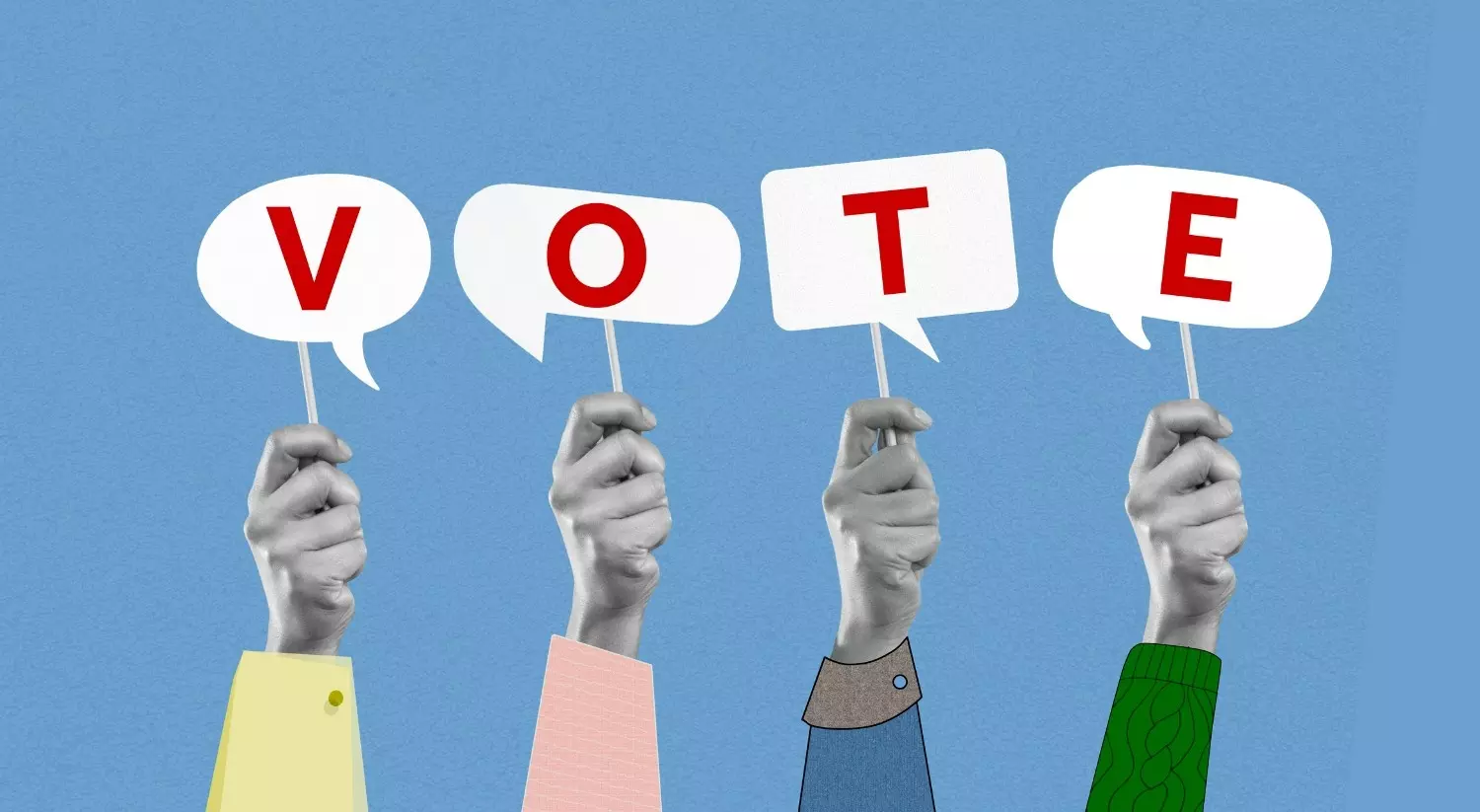
Your Vote and the SIR
GK & Current Affairs for CLAT | CLAT Current Affairs 2026
Powered by CLAT Gurukul – Best online coaching for CLAT
Introduction
India, the world’s largest democracy, relies fundamentally on a transparent, error-free, and inclusive electoral process. To ensure that every eligible voter can exercise their franchise, the Election Commission of India (ECI) periodically revises the electoral rolls.
In October 2025, the ECI announced the launch of a Special Intensive Revision (SIR) of electoral rolls across 12 States and Union Territories, beginning November 4, 2025. This massive revision exercise aims to verify voter identities, remove inaccuracies, and ensure that new eligible voters are registered before the next general elections.
For CLAT 2026 aspirants, understanding this topic is vital — it intersects with constitutional law (Article 324, adult suffrage, election law), citizenship law, and administrative procedures. Moreover, the SIR highlights how institutions uphold democratic participation and transparency — key pillars of the Indian legal system.
Why in News
- The Election Commission’s Special Intensive Revision (SIR) begins on November 4, 2025, covering 12 States and Union Territories.
- The drive involves re-enumeration of almost half of India’s 1 billion registered voters.
- The goal: to update electoral rolls and verify voter eligibility using identity documents and local verification.
- The SIR comes two decades after the last similar nationwide intensive revision exercise, ensuring that all citizens above 18 years of age have their names correctly entered in the electoral rolls.
- The process is particularly crucial in view of the upcoming 2026 Assembly Elections in several states, and the 2029 General Elections thereafter.
States and Union Territories Covered
The SIR will be carried out in the following 12 regions:
- Andaman & Nicobar Islands
- Chhattisgarh
- Goa
- Gujarat
- Kerala
- Lakshadweep
- Madhya Pradesh
- Puducherry
- Rajasthan
- Tamil Nadu
- Uttar Pradesh
- Bihar
These regions account for nearly half of India’s total voter base, making the exercise a crucial test of administrative efficiency.
Objective of the Special Intensive Revision (SIR)
- Accuracy:
To remove duplicate or outdated entries and eliminate deceased voters’ names. - Inclusion:
To add newly eligible voters who have turned 18 years old by January 1, 2026. - Verification:
To verify the authenticity of voter information such as name, age, address, and citizenship. - Transparency:
To ensure a publicly verified list of voters, preventing fraudulent or bogus voting. - Legal Compliance:
To comply with Section 14 of the Representation of the People Act, 1950, which mandates regular updating of electoral rolls.
Step-by-Step Process of the SIR
The Indian Express explains the stepwise procedure that voters must follow to remain on the rolls or register afresh.
STEP 1: Enumeration (November 4 to December 4, 2025)
- Enumerators will visit homes door-to-door to fill Form 1, also known as the House-to-House Enumeration Form.
- Voters must verify or fill their names, EPIC number (Voter ID), and other details.
- This includes new voters, corrections, deletions, and transpositions (shifting to a new constituency).
STEP 2: Check and Fill Your Details
- The enumerator will display pre-printed enumeration forms for verification.
- Voters must cross-check details like name, father’s name, age, gender, and address.
- Errors can be corrected on the spot.
- Missing voters’ names can be added through Form 6.
Documents Required:
Voters must produce any of the following for verification:
- Aadhaar Card (only as proof of identity, not citizenship)
- Passport
- PAN Card
- Birth Certificate
- Driving License
- Utility Bills (for address proof)
- School/College Certificate (for age proof)
STEP 3: Submit the Filled Form
- The filled form is signed by both the enumerator and the voter.
- Each voter receives a receipt acknowledging the submission.
- If the voter cannot sign, another adult family member can sign on their behalf.
- All forms will be verified by Booth Level Officers (BLOs).
If inconsistencies are found, the BLO will contact the voter for clarification or document submission.
STEP 4: Keep Your Documents Ready
Voters must keep ready:
- Proof of age and citizenship (such as Birth Certificate or Class 10 Certificate).
- Proof of residence (such as utility bill or ration card).
- Proof of identity (Aadhaar, passport, or PAN).
If voters are unable to trace their names from the last revision (done before 2007), they must provide details of their parents or relatives who were on the older rolls.
STEP 5: Check the Draft Electoral Roll (December 9, 2025)
- The draft electoral rolls will be published on December 9, 2025.
- They will be available for public inspection at:
- Polling stations
- Offices of BLOs
- Online at voters.eci.gov.in
Voters must verify whether their names and details are correctly listed.
If discrepancies exist:
- File Form 6 (for inclusion), Form 8 (for correction), or Form 7 (for objection) before January 25, 2026.
STEP 6: Claims and Objections (December 9, 2025 – January 25, 2026)
- Citizens can submit claims for inclusion or correction during this period.
- The hearing of claims and objections will take place from December 25, 2025 – January 31, 2026.
- BLOs will verify the authenticity of claims with supporting documents.
STEP 7: Final Publication (February 7, 2026)
- The final updated and verified electoral rolls will be published on February 7, 2026.
- The updated rolls will form the official voter list for the upcoming elections.
Documents Accepted as Proof
To ensure uniformity and avoid confusion, the ECI has listed 13 acceptable documents:
- Aadhaar Card (only as an ID, not citizenship proof)
- Passport
- Driving License
- PAN Card
- Birth Certificate
- School/College Certificate
- Bank/Post Office Passbook
- Ration Card
- Employment ID issued by Government
- Health Insurance Card (ESIC/CGHS)
- Certificate of Caste or Domicile
- Utility Bills (Electricity/Water)
- Pension Card or Service Certificate
Legal Significance of the SIR
- Under Article 324 of the Constitution, the Election Commission of India has the power to supervise and control elections to Parliament and State Legislatures, including the preparation of electoral rolls.
- Representation of the People Act, 1950 (RPA):
- Provides the statutory framework for electoral rolls.
- Section 14 authorizes the Commission to revise rolls periodically.
- Section 15 mandates inclusion of all citizens above 18 years of age.
- Aadhaar and Privacy:
- The use of Aadhaar is voluntary, as the Supreme Court’s Puttaswamy v. Union of India (2018) judgment prohibits making it mandatory for voting purposes.
- Voter verification cannot rely solely on Aadhaar data — citizenship proof is essential.
Challenges Highlighted by the ECI
- Duplicate Entries:
Migration and frequent address changes create multiple voter records. - Dead Voters’ Names:
Lack of timely updates leads to inclusion of deceased individuals. - Urban Voter Apathy:
Large numbers of city dwellers fail to verify or correct their records. - Digital Access Gap:
Limited awareness among rural populations regarding online verification.
Why This Exercise Matters
- For the Citizen:
- Ensures your right to vote (Article 326) remains intact.
- Prevents disenfranchisement due to administrative errors.
- For Democracy:
- Strengthens electoral credibility by eliminating fake voters.
- Guarantees free and fair elections as envisioned under the Constitution.
- For Governance:
- Updated rolls aid in efficient delimitation, polling station planning, and resource allocation during elections.
Important Dates to Remember
Event | Dates |
House-to-House Enumeration | Nov 4 – Dec 4, 2025 |
Draft Electoral Roll Published | Dec 9, 2025 |
Claims & Objections Period | Dec 9, 2025 – Jan 25, 2026 |
Hearings & Verification | Dec 25, 2025 – Jan 31, 2026 |
Final Electoral Roll Publication | Feb 7, 2026 |
Broader Implications for CLAT 2026 Aspirants
- The SIR reflects practical implementation of constitutional rights — particularly universal adult franchise.
- It demonstrates the legal-constitutional balance between privacy (Article 21) and citizenship identification.
- The process embodies administrative law principles such as natural justice (audi alteram partem), since citizens can raise objections to inclusion or deletion.
- It highlights public law accountability, with ECI ensuring transparent access to verification data.
Conclusion
The Special Intensive Revision (SIR) marks a crucial step in preserving the integrity of India’s electoral democracy. By updating voter rolls through direct participation and verification, the Election Commission reaffirms that each citizen’s vote counts.
For CLAT aspirants, this topic connects constitutional theory to administrative practice — showing how citizenship, identity, and rights are operationalized in real governance.
As India prepares for major elections in the coming years, this revision drive ensures that the spirit of “one person, one vote” remains the bedrock of the Republic.
This Blog is Powered by CLAT Gurukul — India’s Leading Law Entrance Prep Platform
At CLAT Gurukul, we believe in empowering future legal minds with the right blend of knowledge, strategy, and mentorship. This blog is a reflection of our commitment to quality content that not only helps aspirants stay updated but also sharpens their conceptual clarity.
Why CLAT Gurukul?
- Personalized Mentorship by Top Legal Educators
- Comprehensive Study Materials & Legal Updates
- Daily Practice Sets, Mocks & Performance Tracking
- Result-Oriented Strategy for CLAT, AILET, and CUET
Whether you’re reading this article to deepen your understanding or to stay ahead in your exam prep — you’re already one step closer with CLAT Gurukul by your side.
Join thousands of successful aspirants who trusted CLAT Gurukul and cracked India’s top law entrance exams.
Visit https://www.youtube.com/@CLATGurukul/shorts to learn more or speak to our experts now!
Note from CLAT Gurukul
At CLAT Gurukul, we are committed to providing free CLAT study material, including CLAT current affairs, legal reasoning practice sets, general knowledge updates, logical reasoning questions, English comprehension exercises, and more — all curated by top mentors.
Our blog section is regularly updated with high-quality CLAT content tailored to match the evolving pattern of the CLAT UG exam. Whether you’re looking for CLAT 2026 current affairs, CLAT legal reasoning passages, or mock practice sets, we have you covered.
We believe in open-access learning and will continue to publish free CLAT preparation resources to help serious aspirants succeed.
Explore more free content under categories like:
Best online coaching for CLAT, CLAT current affairs, CLAT GK updates, CLAT legal updates, CLAT logical reasoning, and CLAT English preparation.
For structured learning, daily mocks, and expert mentorship, visit https://www.youtube.com/@CLATGurukul/shorts — the Best CLAT Coaching in Patna and India’s most trusted platform for CLAT online coaching.