
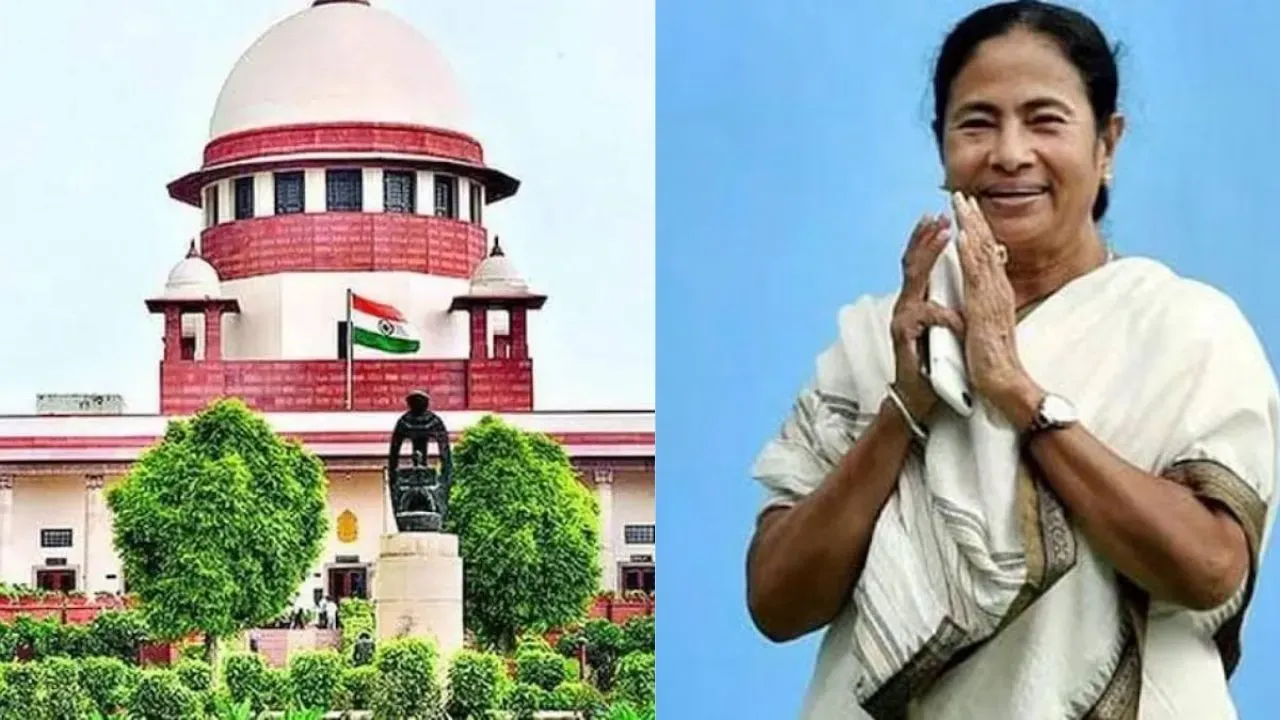
Legal Battle over MGNREGS in Bengal
GK & Current Affairs for CLAT | CLAT Current Affairs 2026
Powered by CLAT Gurukul – Best online coaching for CLAT
Introduction
The Supreme Court of India recently cleared the path for the resumption of the Mahatma Gandhi National Rural Employment Guarantee Scheme (MGNREGS) in West Bengal, ending a suspension that had lasted over three and a half years. This decision is a major development in the ongoing legal and political dispute between the Centre and the West Bengal government regarding the implementation and funding of one of India’s largest welfare programmes.
The case highlights crucial constitutional questions about Centre–State financial relations, accountability mechanisms, and administrative compliance within welfare delivery systems. Given the magnitude of MGNREGS and its socio-economic impact, this issue has become central to discussions on federalism and rural employment policy — making it a key topic for CLAT Current Affairs 2026 preparation.
Why in News
The Supreme Court’s order on October 31, 2025, upheld the Calcutta High Court’s decision directing the resumption of MGNREGS in West Bengal from August 1, 2025. The Centre’s plea challenging the High Court order was dismissed, thus paving the way for restarting wage employment works that had been halted since March 2022.
The verdict is particularly significant as it restores the implementation of a statutory right to work for lakhs of rural citizens in West Bengal, guaranteed under the Mahatma Gandhi National Rural Employment Guarantee Act (MGNREGA), 2005.
This judicial intervention comes after prolonged administrative and political tussles — where the Centre had alleged corruption, non-compliance, and misuse of funds by the state government, leading to the suspension of funds for the scheme.
Background of MGNREGS
- Enacted under: Mahatma Gandhi National Rural Employment Guarantee Act, 2005.
- Objective: To provide at least 100 days of guaranteed wage employment in a financial year to every rural household whose adult members volunteer to do unskilled manual work.
- Nature of entitlement: Legal right to work — enforceable through the law.
- Funding pattern:
- Central Government: Pays full wage costs and a majority of material costs.
- State Government: Provides part of the material cost and administrative expenses.
Before suspension, 51–80 lakh families in West Bengal availed MGNREGS benefits every year between 2014–15 and 2021–22.
Why Was the Scheme Paused?
- On March 9, 2022, the Central Government stopped releasing funds to West Bengal under Section 27 of the MGNREGA Act, 2005, citing “non-compliance of directives” and alleged misuse of funds.
- This meant that for over three years, no new MGNREGS work was sanctioned in West Bengal.
- The Centre’s inspection teams had highlighted implementation issues, including irregularities, corruption, and lack of transparency in wage payments and asset creation.
- The Ministry of Rural Development (MoRD) maintained that until the state fulfilled certain compliance conditions, funds could not be released.
Legal Developments and Court Proceedings
- Repeated Appeals by the State:
The West Bengal government and TMC MPs repeatedly appealed to the Centre to resume the scheme. Delegations led by Abhishek Banerjee met officials at Krishi Bhavan, but no resolution was reached. - Calcutta High Court Order (June 18, 2025):
The Court directed that MGNREGS be implemented prospectively from August 1, 2025. - Centre’s Appeal in Supreme Court (July 31, 2025):
A day before the deadline, the Centre challenged the High Court’s order, arguing that compliance conditions were not yet met. - Supreme Court Ruling (October 31, 2025):
The SC dismissed the Centre’s plea, effectively upholding the High Court order. The Court observed that the Centre had no procedural ground left to delay the scheme’s resumption.
Impact of Supreme Court Decision
- The judgment is seen as a setback for the Ministry of Rural Development (MoRD), which had been cautious about releasing funds due to corruption allegations.
- The ruling underscores that the Right to Work under MGNREGA cannot be indefinitely suspended due to administrative reasons.
- It also reiterates the federal accountability principle — the Centre must ensure compliance but cannot withhold statutory entitlements indefinitely.
What Happens Next: Procedural Requirements
Before the actual disbursement of funds and resumption of work, certain administrative steps must be followed:
- Preparation of Labour Budget:
- Each state must prepare a labour budget, estimating the number of person-days and list of works to be undertaken.
- This proposal is then sent to the Ministry of Rural Development for approval.
- In West Bengal’s case, no labour budget has been approved since FY 2021–22.
- Approval by Empowered Committee:
- The labour budget proposal is examined by an Empowered Committee headed by the Union Rural Development Secretary.
- Only after approval does the Centre release funds to the state.
- MIS Clearance:
- The Management Information System (MIS) of MGNREGS must clear each labour budget proposal before fund release.
- Timeline:
- Normally, the MoRD approves state budgets by January (before the new financial year).
- Therefore, even though the scheme has been judicially cleared, administrative resumption may take a few months.
Pending Dues and Financial Liabilities
- Sources indicate that Rs. 18,000 crore in total dues are pending under three major rural schemes in West Bengal:
- MGNREGS
- PM Awas Yojana–Gramin (PMAY-G)
- PM Gram Sadak Yojana (PMGSY)
- Of this, about Rs. 13,965 crore pertains to MGNREGS and PMAY-G alone (as stated in Parliament).
- These dues reflect Centre–State financial disputes and delayed compliance verification.
Political and Administrative Implications
- The issue has deepened Centre–State political rivalry, especially between the BJP-led Centre and the TMC-led West Bengal government.
- For the Centre, the SC ruling represents a loss of administrative leverage to enforce compliance.
- For the state, it is a symbolic victory that reinforces the principle that welfare entitlements cannot be suspended indefinitely due to bureaucratic differences.
Significance for CLAT Current Affairs 2026
This case is important for law and governance-based current affairs for the CLAT 2026 exam because it involves:
- Constitutional Principles: Centre–State financial powers, federal accountability, and administrative law.
- Statutory Rights: Enforcement of socio-economic entitlements under MGNREGA, which provides a right to work.
- Judicial Review: The judiciary’s power to compel administrative compliance and protect statutory rights.
- Policy Implications: The procedural bottlenecks in welfare delivery systems in India.
Key Takeaways for Students
- MGNREGS is India’s largest rural employment programme guaranteeing wage employment for unskilled labourers.
- The Centre-State financial mechanism under the scheme is delicate — with the Centre funding wages and the state managing local implementation.
- Suspension of funds affects millions of rural households, making it both a legal and humanitarian concern.
- The Supreme Court’s intervention restores this statutory entitlement and sets a precedent for similar disputes in the future.
Notes (Explanation of Key Terms)
- MGNREGA, 2005: A central legislation guaranteeing 100 days of wage employment per rural household annually for unskilled work.
- Section 27 of MGNREGA: Empowers the Central Government to stop funds to a state in cases of non-compliance or misappropriation.
- Labour Budget: A yearly plan submitted by states estimating the total person-days and works to be undertaken under MGNREGS.
- MoRD: Ministry of Rural Development, the nodal authority for policy and fund release under MGNREGS.
- PMAY-G: Pradhan Mantri Awas Yojana–Gramin, a rural housing scheme.
- PMGSY: Pradhan Mantri Gram Sadak Yojana, a rural road connectivity scheme.
- Empowered Committee: A high-level committee that examines and approves state MGNREGS labour budgets and monitors fund utilisation.
- MIS (Management Information System): Digital platform that tracks all financial and operational data related to MGNREGS projects.
Conclusion
The Supreme Court’s verdict on resuming MGNREGS in West Bengal underscores the judiciary’s role in upholding statutory welfare rights and ensuring that administrative and political disputes do not override the constitutional promise of livelihood security.
For aspirants preparing with the best online coaching for CLAT and other law entrance exams, this case exemplifies how law intersects with governance, politics, and human rights — making it an ideal topic under Current Affairs 2026 and CLAT Current Affairs 2026 sections.
This Blog is Powered by CLAT Gurukul — India’s Leading Law Entrance Prep Platform
At CLAT Gurukul, we believe in empowering future legal minds with the right blend of knowledge, strategy, and mentorship. This blog is a reflection of our commitment to quality content that not only helps aspirants stay updated but also sharpens their conceptual clarity.
Why CLAT Gurukul?
- Personalized Mentorship by Top Legal Educators
- Comprehensive Study Materials & Legal Updates
- Daily Practice Sets, Mocks & Performance Tracking
- Result-Oriented Strategy for CLAT, AILET, and CUET
Whether you’re reading this article to deepen your understanding or to stay ahead in your exam prep — you’re already one step closer with CLAT Gurukul by your side.
Join thousands of successful aspirants who trusted CLAT Gurukul and cracked India’s top law entrance exams.
Visit https://www.youtube.com/@CLATGurukul/shorts to learn more or speak to our experts now!
Note from CLAT Gurukul
At CLAT Gurukul, we are committed to providing free CLAT study material, including CLAT current affairs, legal reasoning practice sets, general knowledge updates, logical reasoning questions, English comprehension exercises, and more — all curated by top mentors.
Our blog section is regularly updated with high-quality CLAT content tailored to match the evolving pattern of the CLAT UG exam. Whether you’re looking for CLAT 2026 current affairs, CLAT legal reasoning passages, or mock practice sets, we have you covered.
We believe in open-access learning and will continue to publish free CLAT preparation resources to help serious aspirants succeed.
Explore more free content under categories like:
Best online coaching for CLAT, CLAT current affairs, CLAT GK updates, CLAT legal updates, CLAT logical reasoning, and CLAT English preparation.
For structured learning, daily mocks, and expert mentorship, visit https://www.youtube.com/@CLATGurukul/shorts — the Best CLAT Coaching in Patna and India’s most trusted platform for CLAT online coaching.